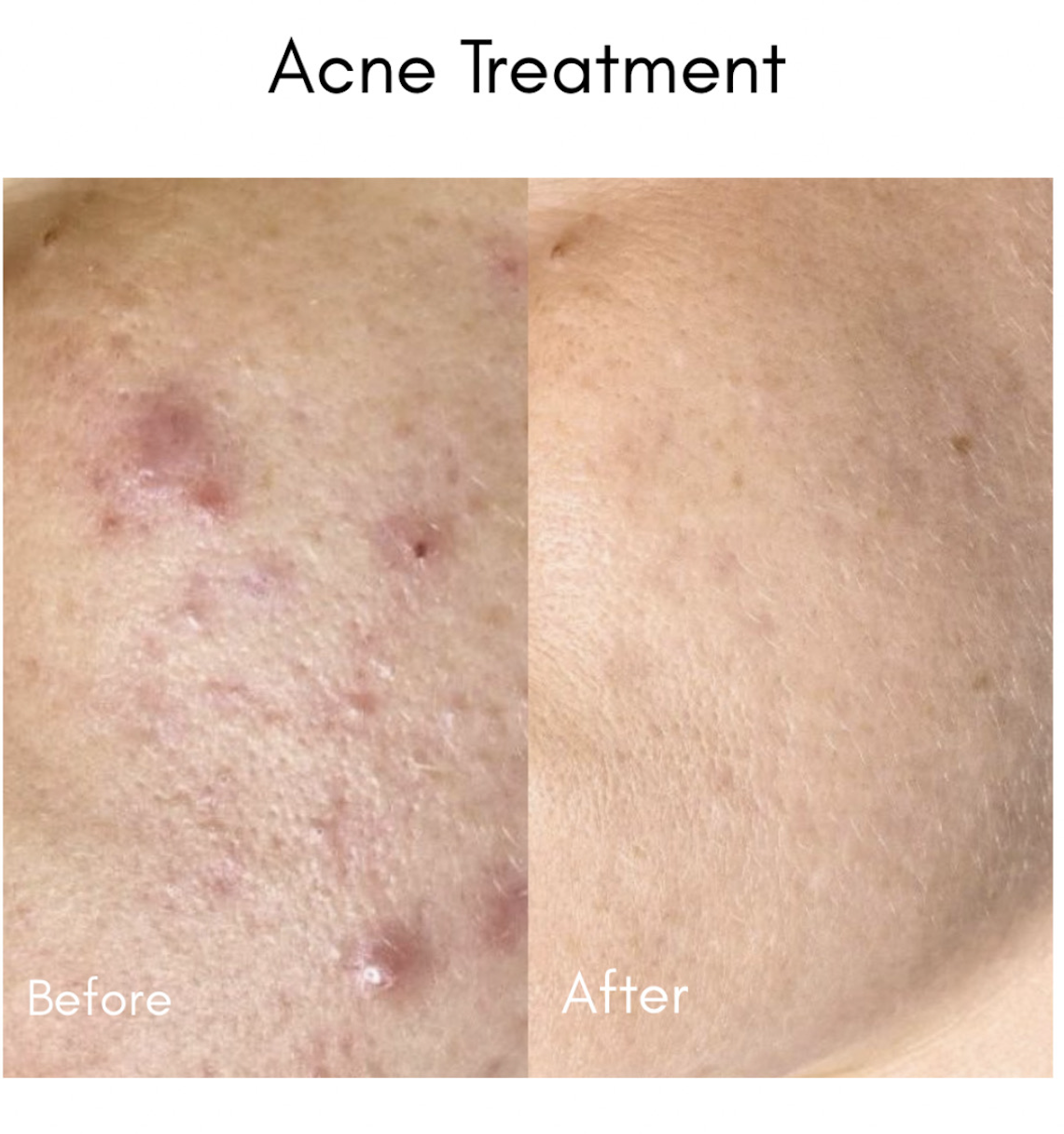
Acne Treatment in Amman
Personalized Acne Treatment at Helalat Clinic
Acne is one of the most common skin conditions and can affect teenagers and adults alike. It can cause pimples, blackheads, whiteheads, inflamed spots, cysts and nodules, and may leave behind acne scars or dark marks.
At Helalat Clinic in Dabouq, Amman, Dr. Mohammad Helalat provides personalized dermatological assessment and acne treatment based on the type, severity and distribution of your acne, as well as your skin type and individual needs.
The goal of acne treatment is not only to improve existing breakouts, but also to reduce new acne, minimize inflammation and help prevent long-term acne scarring.
What Causes Acne?
Acne develops when hair follicles become blocked with oil and dead skin cells. Inflammation and changes involving the skin's microorganisms can contribute to the development of acne.
Acne can be influenced by several factors, including:
Excess oil production
Blocked pores
Hormonal changes
Inflammation
Genetics and family history
Certain medications
Skin and cosmetic products that may clog pores
Acne is not caused by poor hygiene, and excessive washing or scrubbing can irritate the skin and potentially make breakouts worse.
Types of Acne
Different types of acne can require different treatment approaches. Acne may appear as:
Blackheads and Whiteheads
These are non-inflammatory forms of acne caused by blocked pores. They commonly appear on the face, nose, forehead and chin.
Papules and Pustules
These are inflamed acne lesions that may appear as red bumps or pimples containing pus.
Cystic and Nodular Acne
Deep, painful nodules and cysts can be more difficult to treat and have a greater risk of causing permanent acne scars. Dermatological assessment is particularly important when acne is severe or painful.
Adult Acne
Acne can continue into adulthood or develop for the first time in adulthood. Adult acne may affect the cheeks, chin, jawline and other areas and can sometimes have hormonal influences.
Acne Treatment in Amman
There is no single acne treatment that is suitable for everyone. Dr. Mohammad Helalat assesses your skin and acne before developing an individualized treatment plan.
Depending on your acne and medical history, treatment may include topical medications, oral medications, professional procedures or a combination of approaches.
Topical Acne Treatments
Topical treatments may be used to target blocked pores, inflammation and acne-causing factors.
Depending on the individual patient, dermatological treatment may include ingredients such as:
Retinoids
Benzoyl peroxide
Azelaic acid
Salicylic acid
Topical antibiotics when appropriate
Other prescription acne medications
The appropriate medication and combination depend on the patient's skin, acne severity, age, medical history and treatment goals.
Oral Acne Treatments
Patients with moderate or severe acne may sometimes require medication that works throughout the body.
Depending on the individual case, a dermatologist may consider treatments such as oral antibiotics, hormonal therapy or isotretinoin.
These treatments require appropriate medical assessment and monitoring. They should not be started or stopped without medical advice.
Treatment of Severe or Painful Acne
Deep, painful acne can increase the risk of permanent scarring. Early dermatological treatment can help control inflammation and reduce the risk of further scarring.
For selected large and painful inflammatory lesions, a dermatologist may also consider an intralesional corticosteroid injection.
Acne Treatment for Adults and Teenagers
Acne can affect people at different stages of life. Teenagers commonly experience acne during puberty, while adult acne can persist or develop later.
At Helalat Clinic, treatment is selected according to the patient's age, acne type, severity, skin characteristics and medical history.
Acne and Acne Scars
Treating active acne is an important first step in reducing the risk of new acne scars.
If acne has already caused scars or persistent dark marks, treatment can be considered separately once the acne is appropriately controlled.
Helalat Clinic also offers treatments for acne scars and skin rejuvenation, which may be considered depending on the type and depth of scarring.
How Long Does Acne Treatment Take?
Acne treatment does not usually produce overnight results. Improvement generally requires consistent treatment over time, and the response varies from person to person.
Some patients may begin to notice improvement within several weeks, while more significant acne may require a longer treatment period and ongoing follow-up.
Following the recommended treatment plan consistently is important for achieving and maintaining clearer skin.
Acne Skin Care
A simple, consistent skincare routine can support acne treatment.
Generally, acne-prone skin benefits from:
A gentle cleanser
Non-comedogenic skincare products
Appropriate moisturization
Daily broad-spectrum sunscreen
Avoiding excessive scrubbing
Avoiding picking or squeezing pimples
Picking or squeezing acne can increase inflammation and may increase the risk of scarring and persistent dark marks
Acne Scar Treatments in Amman
Advanced Acne Scar Treatment at Helalat Clinic
Acne scars can remain long after active acne has cleared, affecting the texture, smoothness and appearance of the skin. Different types of acne scars require different treatment approaches, which is why an individual assessment is important before choosing a procedure.
At Helalat Clinic in Dabouq, Amman, Dr. Mohammad Helalat provides personalized treatment plans for acne scars based on the type, depth, location and severity of scarring, as well as your skin type and treatment goals.
The aim of acne scar treatment is to improve skin texture, reduce the appearance of scars and promote smoother, healthier-looking skin.
Treatments for Acne Scars
Depending on the patient, acne scar treatment may include:
Fractional CO2 Laser
Fractional CO2 laser treatment uses controlled laser energy to stimulate skin remodeling and collagen production.
It may be used to improve:
Uneven skin texture
Depressed acne scars
Skin irregularities
Overall skin rejuvenation
Several treatment sessions may be recommended depending on the severity of scarring.
Microneedling
Microneedling uses controlled microscopic punctures to stimulate the skin's natural healing response and collagen production.
It may be considered for certain types of superficial and moderately depressed acne scars and can also improve overall skin texture, in addition many patients may require a special solution such as exosome treatment combination to further improve skin healing and remodeling.
Dermapen
Dermapen is a microneedling treatment that uses a motorized device to create controlled micro-injuries in the skin.
It may be used as part of an individualized acne scar treatment plan to encourage collagen remodeling and improve uneven skin texture.
Chemical Peels
Certain chemical peels can improve skin texture and pigmentation associated with acne.
The type and strength of peel should be selected according to the patient's skin type, pigmentation and specific concern.
Chemical peels may be particularly useful when acne scars are accompanied by post-inflammatory pigmentation or uneven skin tone.
What Causes Acne Scars?
Acne can cause inflammation deep within the skin. When the skin heals, this inflammation can sometimes result in permanent changes to the skin's texture.
The risk of acne scarring can increase with:
Deep or inflammatory acne
Cystic or nodular acne
Picking or squeezing pimples
Delayed treatment of severe acne
Repeated inflammation
Dark marks left after acne are not always true scars. Post-inflammatory hyperpigmentation can appear as brown or dark spots after a pimple heals and may require a different treatment approach.
Types of Acne Scars
Identifying the type of acne scar is an important part of selecting the appropriate treatment.
Atrophic Acne Scars
These scars appear as depressions or indentations in the skin and are commonly associated with previous inflammatory acne.
They can include:
Ice pick scars – narrow, deep depressions
Boxcar scars – wider depressions with defined edges
Rolling scars – shallow depressions that create an uneven or wavy skin texture
When Should You See a Dermatologist for Acne?
You should consider a dermatological assessment if:
Your acne is painful or deep
Acne is leaving scars
You have persistent breakouts despite skincare or over-the-counter products
Acne is affecting your confidence or quality of life
You have widespread or severe acne
Your acne started suddenly in adulthood
You are unsure whether your skin condition is actually acne
Some conditions can resemble acne, including folliculitis and perioral dermatitis, so an accurate diagnosis is an important first step.
Why Choose Helalat Clinic for Acne Treatment in Amman?
At Helalat Clinic, acne treatment begins with an assessment of your individual skin and acne rather than using a one-size-fits-all approach.
Dr. Mohammad Helalat combines dermatological assessment with a personalized treatment strategy designed around your acne severity, skin type, medical history and treatment goals.
The clinic is located in Dabouq, Amman, making it convenient for patients seeking dermatological and acne treatment in Amman.
Frequently Asked Questions About Acne
What is the best treatment for acne?
There is no single best acne treatment for everyone. Treatment depends on the type and severity of acne and the patient's individual circumstances. A dermatologist can determine the most appropriate approach.
Can acne be permanently cured?
Acne can usually be controlled effectively with appropriate treatment, although some people may experience recurrent breakouts. Maintenance treatment may help prevent acne from returning.
Can acne cause permanent scars?
Yes. Severe or inflammatory acne can cause permanent acne scars. Treating acne early can help reduce the risk of scarring.
Does popping pimples cause scars?
Picking and squeezing acne can increase inflammation and may increase the risk of scarring and dark marks.
Can adults get acne?
Yes. Acne can persist from adolescence into adulthood or develop for the first time during adulthood.
How long does acne treatment take?
Results vary depending on the severity of acne and the treatment used. Many acne treatments require several weeks of consistent use before noticeable improvement occurs.
Can acne be treated with laser or chemical peels?
Certain procedures may have a role in acne management or in treating the effects of acne, but they are not appropriate for every patient. A dermatologist should determine whether a procedure is suitable for your specific acne.
Book an Acne Consultation in Amman
If you are looking for acne treatment in Amman, Dr. Mohammad Helalat can assess your skin and recommend an individualized treatment plan.
Helalat Clinic
Dabouq Commercial Complex B, 2nd Floor
Juma Al Shebli St 8, Dabouq
Amman, Jordan
Phone / WhatsApp: +962 7 9692 4250
[Book an Appointment]
[Contact Helalat Clinic]