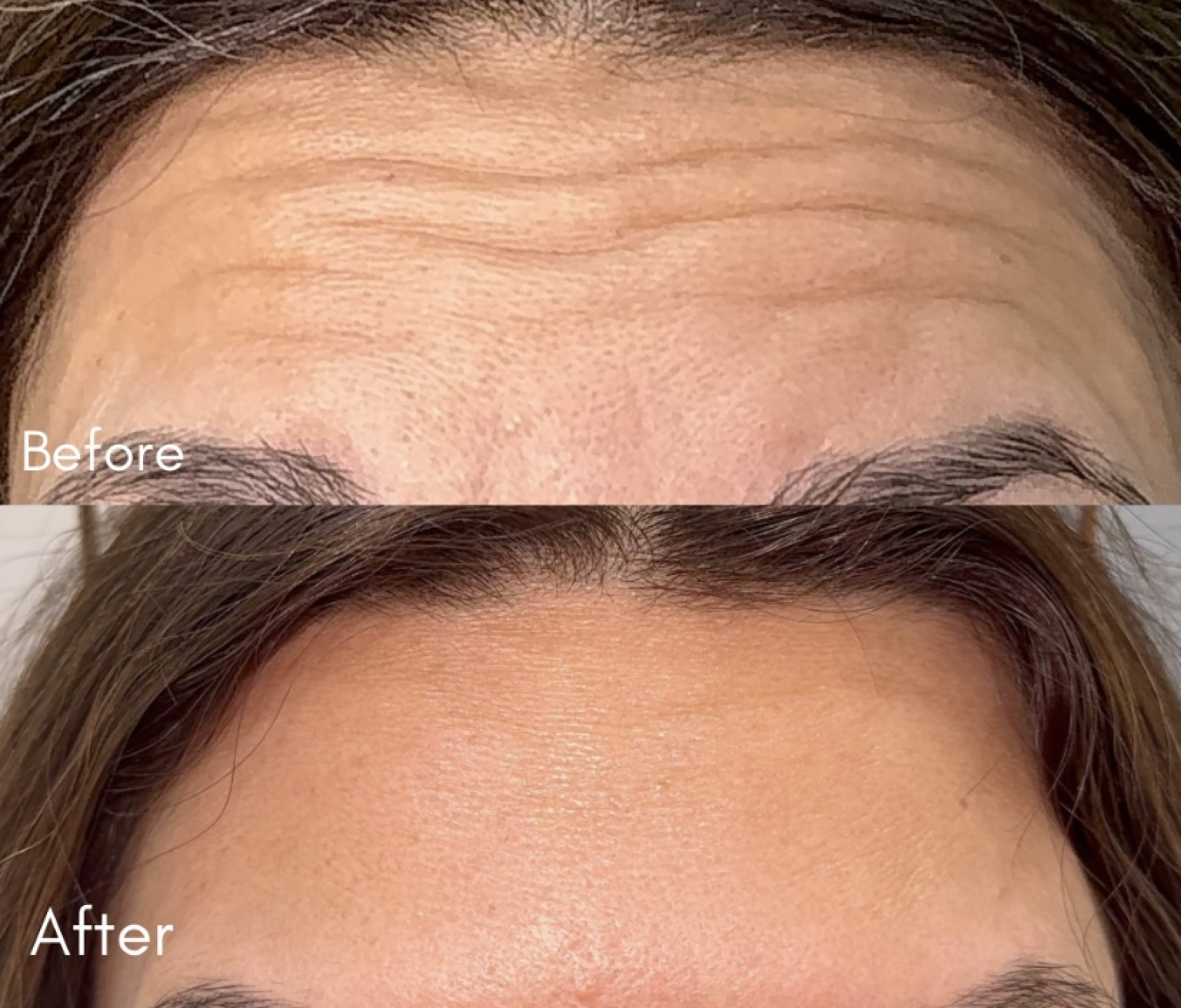
Its a popular, non-surgical treatment offered at Helalat Clinic in Amman to temporarily relax specific facial muscles, softening the appearance of fine lines and wrinkles. It is commonly used to treat forehead lines, frown lines, crow's feet, and other dynamic wrinkles caused by repeated facial expressions.
Dr. Mohammad Helalat, a consultant dermatologist, evaluates each patient's facial anatomy and skin condition before recommending a treatment plan tailored to their goals. The aim is always to achieve a natural, refreshed appearance rather than a frozen or overdone look.
The results are not immediate — most patients notice a difference within 2 to 4 days, with the full effect typically visible within 10 to 14 days. Results generally last several months, after which follow-up treatment can help maintain the effect.
Botox Treatments in Helalat Clinic at Amman
Areas Treated
Forehead lines — horizontal lines that appear when raising the eyebrows
Frown lines — vertical lines between the eyebrows (glabellar lines)
Crow's feet — fine lines around the outer corners of the eyes
Nasolabial lines — lines running from the nose to the corners of the mouth
Lip lines — fine lines around the mouth, sometimes called "smoker's lines"
Chin — dimpling or "orange peel" texture on the chin
Masseter/jaw area — used to slim a square jawline or relieve jaw tension from teeth grinding (bruxism)

Is This Treatment Right for You?
It is suitable for patients looking to soften the appearance of dynamic wrinkles, those caused by repeated facial movements such as frowning, squinting, or raising the eyebrows. It is also sometimes used to help manage excessive sweating (hyperhidrosis). During a consultation at Helalat Clinic, Dr. Mohammad Helalat will assess your facial anatomy, skin condition, and treatment goals to determine whether is an appropriate option for you.
What to Expect During Treatment
This injectable is administered through a series of small injections into the targeted muscles. The procedure is quick, typically taking no more than 15–30 minutes, and requires no downtime, allowing most patients to resume their normal activities immediately afterward. Some mild redness or swelling at the injection site may occur but usually resolves within a short time.
Aftercare
Following treatment, patients are generally advised to avoid rubbing or massaging the treated area, remain upright for a few hours, and avoid strenuous exercise for the remainder of the day. Dr. Mohammad Helalat will provide specific aftercare guidance tailored to your treatment during your consultation.